


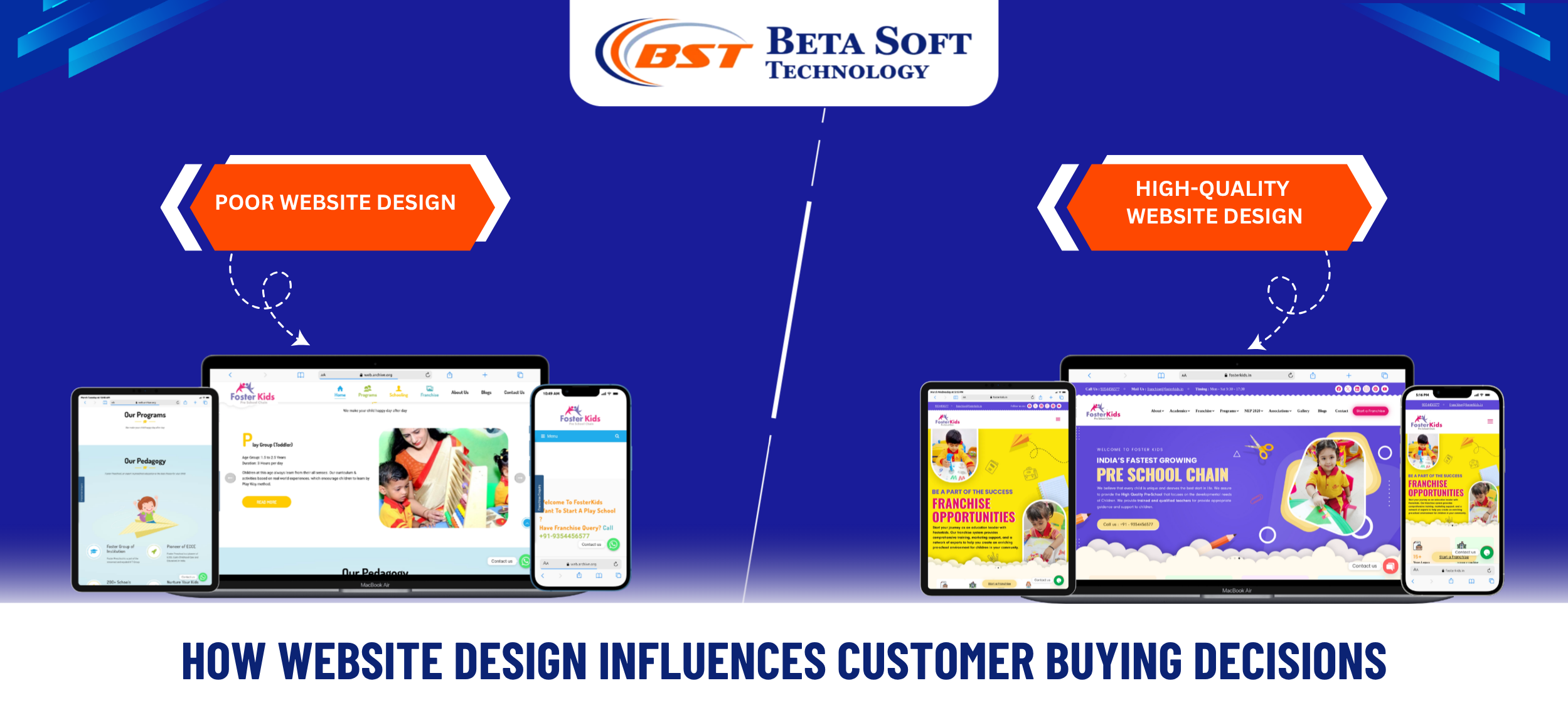
Website design plays a crucial role in influencing customer buying decisions and directly impacts conversions, engagement and overall business growth. When a visitor lands on a website, elements such as layout, page speed, mobile responsiveness, colours and navigation immediately shape their perception of the brand.
Studies show that users form an opinion about a website within milliseconds, making first impressions a key factor in whether they stay, explore further or leave. A well-structured, user-friendly design not only enhances user experience but also builds trust, improves credibility and guides visitors toward taking action.
The impact of website design on sales goes beyond visual appeal. A conversion-focused website is strategically designed to reduce friction, highlight important information and lead users smoothly toward enquiries, sign-ups or purchases.
In this guide, we will explore how website design influences customer buying behaviour, the role of website design psychology and how businesses can use conversion-focused design strategies to increase leads, improve user experience and drive higher revenue.
Why Website Design Directly Impacts Sales and Conversions
A website is often the first interaction a customer has with a business. If the design feels outdated or confusing, trust drops instantly.
Design communicates credibility before a single word is read.
Modern consumers also expect websites to be:
- Fast
- Mobile-friendly
- Easy to navigate
- Visually clear
- Secure
When these elements work together, the impact of website design on sales becomes measurable.
Key Website Design Elements That Influence Buying Behavior
| Factor | Influence on Customer Decision |
| Page Load Speed | Slow pages increase bounce rate and reduce conversions |
| Visual Hierarchy | Helps users find important information quickly |
| Mobile Responsiveness | More than 60% of traffic now comes from mobile devices |
| Navigation Simplicity | Reduces frustration and improves engagement |
| Trust Signals | Builds confidence and encourages purchasing |
These elements combine to create a smooth user experience and buying behaviour pathway.
When visitors feel comfortable navigating a site, they stay longer, explore more pages and convert more often.
The Psychology Behind Website Design and User Decisions
Good design is not just visual creativity. It relies heavily on psychology.
Website design psychology refers to how visual elements influence user actions and decisions online.
For example:
- Warm colours can create excitement
- Blue tones often signal trust and professionalism
- White space improves readability and focus
- Clear call-to-action buttons guide decisions
Small design changes can produce major conversion improvements.
Example: Colour Psychology in Website Design
| Colour | Psychological Effect | Best Used For |
| Blue | Trust, security | Finance, tech services |
| Green | Growth, balance | Health, sustainability |
| Red | Urgency, attention | Sales promotions |
| Orange | Energy, action | Call-to-action buttons |
| Black | Luxury, authority | Premium brands |
When combined with visual design and customer trust, these elements influence how users perceive a brand.
Businesses that apply website design psychology effectively often see measurable improvements in engagement and sales.
How First Impressions Affect Customer Trust
Visitors rarely analyse a website carefully during their first visit.
Instead, they rely on instinct.
This instinctive reaction comes from the first impression website design creates.
Key elements that shape this first impression include:
- Clean layout
- Consistent colour scheme
- Clear typography
- High-quality imagery
- Balanced spacing
Stanford Web Credibility Research reports that 75% of users judge a company’s credibility based on its website design.
That means visual presentation can determine whether visitors trust the brand enough to buy.
A professional layout combined with intuitive navigation improves website credibility factors, reinforcing brand reliability.
Role of User Experience (UX) in Customer Buying Behavior
User experience, often called UX, plays a major role in how visitors interact with a website.
A strong UX design removes friction from the journey.
For example, imagine two websites selling the same product:
- One takes five clicks to reach the checkout page.
- The other takes two clicks.
Which one converts more sales?
The answer is obvious.
Good UX directly improves user experience and buying behaviour.
UX Elements That Increase Conversions
- Clear product descriptions
- Fast loading pages
- Easy navigation
- Accessible menus
- Visible contact information
These elements are essential components of conversion optimization design.
Businesses that invest in UX improvements often experience:
- Higher engagement
- Longer session times
- Increased purchases
Website Design Elements That Build Trust and Credibility
Trust is the foundation of online purchasing decisions.
Without trust, visitors hesitate.
This is where trust-building website design becomes critical.
Key trust-building elements include:
- Secure HTTPS connection
- Professional design layout
- Customer testimonials
- Clear contact details
- Transparent policies
When visitors notice these signals, their confidence increases.
Important Website Credibility Factors
| Credibility Signal | Why It Matters |
| SSL Security | Protects customer data |
| Customer Reviews | Shows real user experiences |
| Professional Branding | Indicates reliability |
| Fast Page Speed | Reflects technical quality |
| Consistent Design | Builds familiarity |
These website credibility factors support visual design and customer trust, helping customers feel comfortable making a purchase.
Companies specialising in professional digital services, such as Betasoft Technology, often focus heavily on these elements when designing websites for businesses.
How Website Design Improves Lead Generation and Sales
A website should do more than provide information.
It should generate leads.
Effective website design for lead generation focuses on guiding visitors toward specific actions, such as:
- Filling out contact forms
- Booking consultations
- Requesting quotes
- Signing up for newsletters
Design plays a major role here.
Key Lead Generation Design Elements
- Clear call-to-action buttons
- Short and simple forms
- Strategic page layout
- Landing pages focused on one goal
- Trust signals near conversion points
These features support both conversion optimisation design and website design for lead generation.
When used together, they increase the likelihood that visitors will take action.
Visual Design and Customer Trust
Humans respond strongly to visual cues.
Professional design communicates competence.
Poor design signals risk.
This explains why visual design and customer trust are closely connected.
Key visual elements that influence trust include:
- High-quality imagery
- Consistent branding
- Clear typography
- Balanced colour palette
- Minimal clutter
When these elements work together, they create a polished user experience.
Visitors perceive the business as credible and trustworthy.
That perception increases conversion rates.
Conversion Optimisation Design: Turning Visitors into Customers
Conversion optimization design focuses on improving the percentage of visitors who complete a desired action.
This process involves analysing behaviour, testing layouts and improving design elements.
Common Conversion Optimisation Strategies
- Simplifying navigation
- Improving page speed
- Optimising mobile design
- Enhancing call-to-action placement
- Reducing form friction
These strategies combine website design psychology, user experience and buying behaviour and website design for lead generation to produce measurable results.
Even small improvements can increase revenue.
For example:
- Changing button colour
- Adjusting page layout
- Shortening forms
These subtle changes can dramatically improve conversion optimisation design outcomes.
How Modern Businesses Approach Website Design
Today’s successful websites combine design, technology and strategy.
They focus on:
- User-focused design
- Mobile responsiveness
- Performance optimisation
- SEO integration
- Conversion-focused layouts
Digital agencies such as Betasoft Technology often apply these principles when building modern business websites.
Their approach typically blends website design psychology, strong UX principles and trust-building website design elements.
This combination helps businesses attract traffic and convert visitors effectively.
Practical Steps to Improve Website Design for Better Conversions
Businesses looking to improve their website performance should focus on these practical steps.
1. Simplify Navigation
Visitors should find what they need within seconds.
Limit menu options and keep categories clear.
2. Improve Mobile Experience
More than half of web traffic now comes from mobile devices.
Responsive design is essential.
3. Optimise Page Speed
Slow pages cause users to leave quickly.
Compress images and reduce unnecessary scripts.
4. Strengthen Trust Signals
Include:
- Testimonials
- Security badges
- Contact information
- Case studies
These strengthen trust-building website design and reinforce website credibility factors.
5. Improve Calls to Action
Make CTA buttons visible and action-driven.
Examples include:
- “Request a Quote”
- “Start Your Project”
- “Book a Free Consultation”
These improve website design for lead generation and support conversion optimization design.
Final Thoughts
Website design is no longer just about aesthetics. It directly influences trust, engagement and sales.
From first impression website design to advanced conversion optimization design, every design choice affects how visitors interact with a brand.
By applying website design psychology, improving user experience and buying behaviour and implementing conversion optimisation design, companies can transform their websites into powerful growth engines.
The digital marketplace continues to evolve rapidly. Companies that invest in professional design strategies will remain competitive and build stronger customer relationships.
A website is not just a digital presence. It is the foundation of modern customer engagement and business growth.
Frequently Asked Questions (FAQ)
How does website design influence customer buying decisions?
Website design influences buying decisions by shaping first impressions, guiding navigation and building trust. A well-designed site improves user experience and buying behaviour, encouraging visitors to explore products and complete purchases.
Why is the first impression of a website important?
Users decide within milliseconds whether a website feels trustworthy. A strong first impression website design increases engagement and reduces bounce rates.
What are the most important website credibility factors?
Important website credibility factors include secure HTTPS connections, professional design, clear branding, customer testimonials and transparent policies.
How does website design help with lead generation?
Effective website design for lead generation uses clear call-to-action buttons, simple forms and strategic layouts that guide visitors toward enquiries or conversions.
What is conversion optimization design?
Conversion optimization design focuses on improving website elements that encourage users to complete specific actions, such as purchases or sign-ups.